Welcome to SEED
SEED is one of four engagement projects developed as part of Sophy & White: The Dunollie Collections Unboxed, a project funded by The National Lottery Heritage Fund.
The SEED theme explores traditional agriculture, food growing, local farming practices, skills and customs, and how mechanisation has transformed both our landscape and the way we produce and consume food.
Staff at Dunollie Museum, Castle and Grounds have created a range of learning resources for primary-aged learners. These resources can be used individually as standalone activities or combined to support a wider learning programme.
On this page, you can download resources, watch our short films, and find out about the borrowing box.
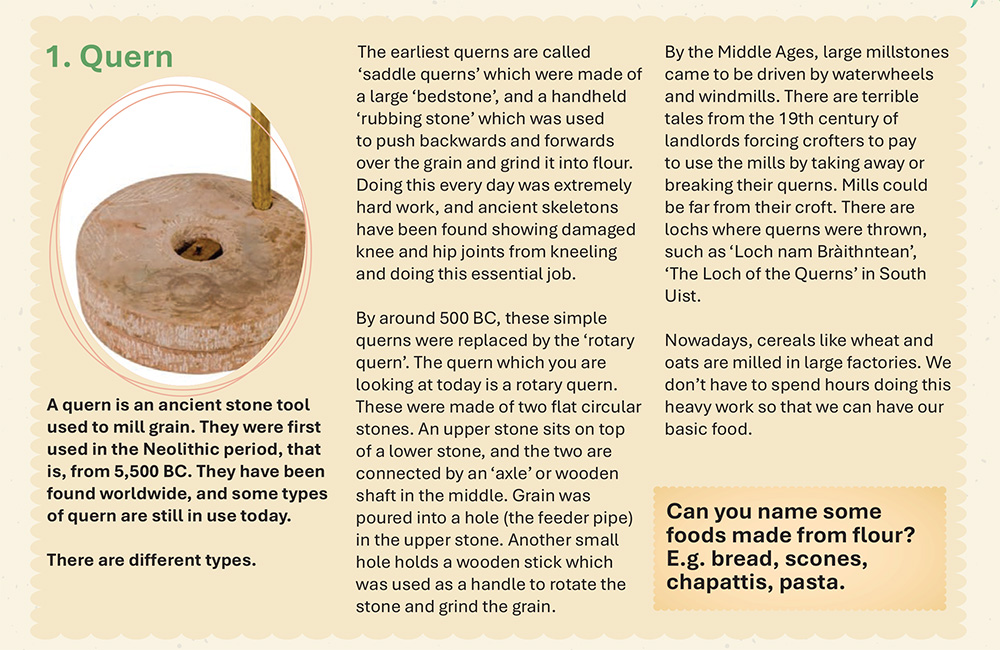
Download the SEED learning resources
Explore detailed information about the objects included in the handling box, along with suggested classroom activities and teaching ideas.
Watch our three short films
Discover more about the history of food production, farming, traditional skills and local customs connected to Dunollie and the surrounding area.
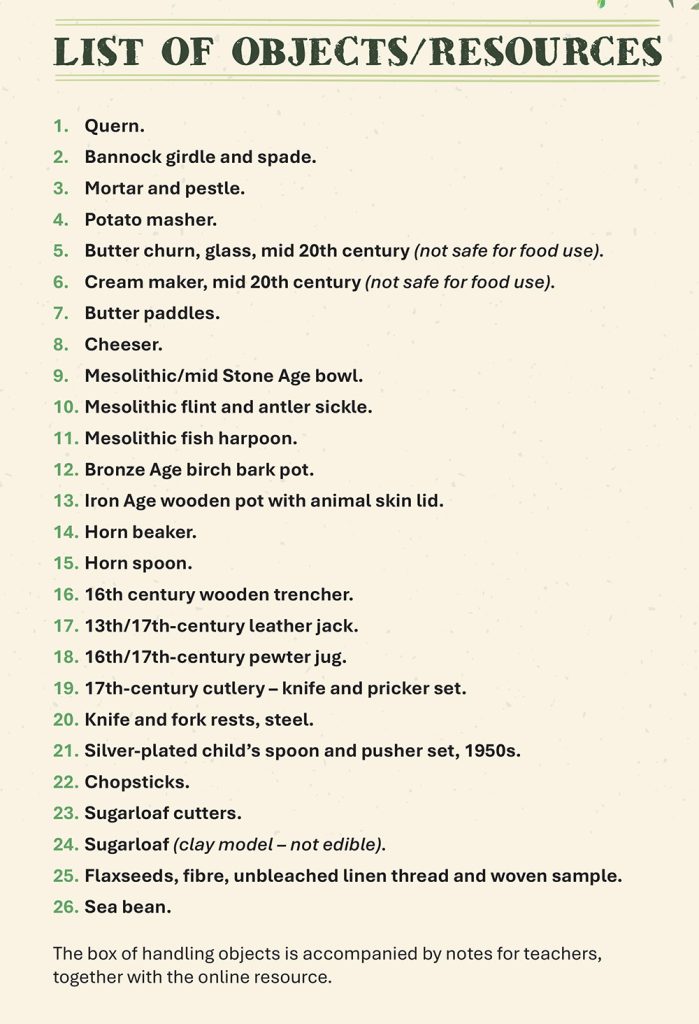
Borrow the SEED handling box
The downloadable resources can be used independently, but they have been designed primarily for use alongside the handling box and are particularly suitable for learners working at Curriculum for Excellence Second Level.
To arrange a loan of the handling box, please contact us at info@dunollie.org
Please note:
- The handling box must be collected from and returned to Dunollie by the borrowing school or organisation.
- A refundable £10 deposit is required to cover any accidental damage or breakages.
We’d love your feedback
We hope you and your learners enjoy exploring the SEED resources. If you use them, please take a few moments to complete our short feedback form. Your comments help us improve and develop future learning opportunities.
https://forms.gle/rsEQvJbmme3YAP798
If you are able, please consider making a small donation to support the creation of more educational and engagement resources for schools and communities.
With grateful thanks to The National Lottery Heritage Fund for making the SEED project possible.